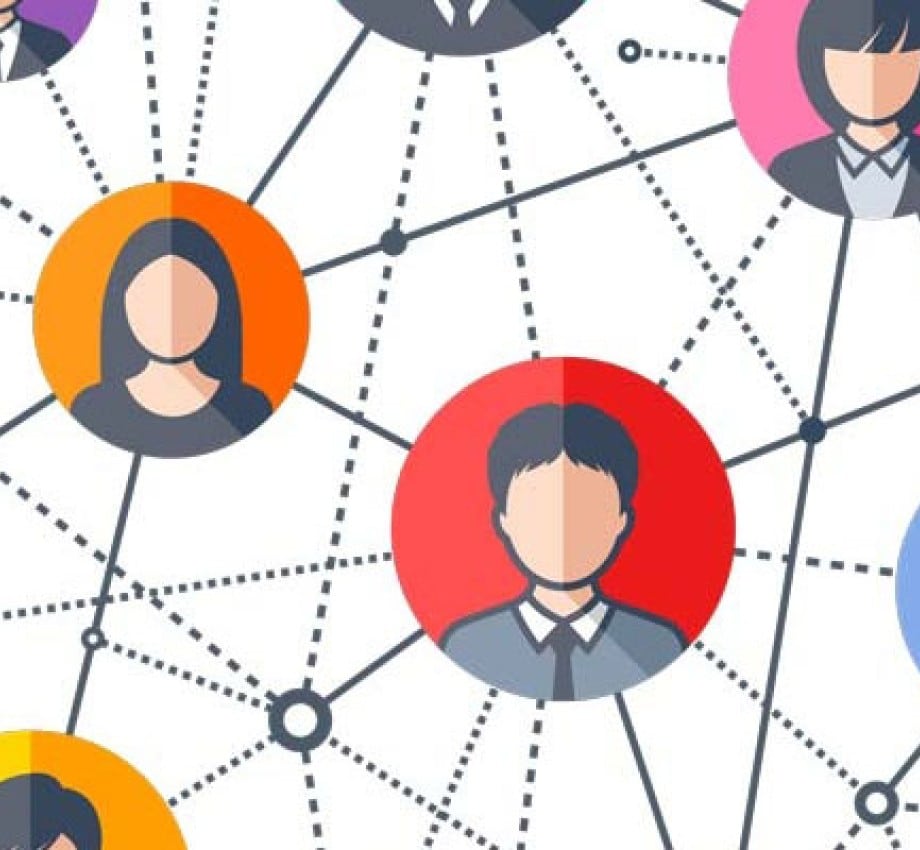
From the time we enter school, we are given a clear script. Study hard. Score well. Rank higher. Compete better. Win. Repeat. And for years, we follow this script almost perfectly, believing that somewhere at the end of it lies success… stability… respect. But somewhere along that journey, something far more fundamental is quietly ignored. We are never truly taught how to connect. Not just to people… but to life itself.
We are not taught how to build relationships that last beyond convenience. We are not taught how to handle conflict without breaking bonds. We are not taught how to listen… not to reply, but to understand. We are not taught how to build circles that support us, challenge us, and grow with us.
Instead, we are trained to outperform the person sitting next to us. And that… is where the imbalance begins.
Because step outside the classroom, and the real world plays by a very different set of rules.
A student who tops the class but cannot work in a team struggles.An employee with certifications but no emotional intelligence becomes difficult to manage. A leader with knowledge but no connection fails to inspire.
Success, in reality, is rarely a solo journey. It is built on networks, relationships, trust, and the ability to navigate people. There’s a quiet truth many discover late in life:
“Your network is not just your net worth… it is your support system, your reality check, and often, your second chance.”
Look at any strong ecosystem in nature. A forest is not just a collection of trees competing for sunlight. Beneath the surface, roots are interconnected, sharing nutrients, warning each other of threats, sustaining the weaker ones. Scientists call this the “Wood Wide Web”… a natural network where survival depends on connection, not competition.
Now pause and reflect. If nature itself thrives on connection… why are we taught to grow in isolation?
History has shown us the same pattern.
Take Mahatma Gandhi. His strength was not just in his ideology, but in his ability to unite millions across differences. Or Nelson Mandela, who built bridges in a nation divided by decades of conflict. Their impact did not come from individual brilliance alone, but from their deep understanding of human connection. Even in modern times, organizations don’t succeed because of isolated talent. They succeed because of collaboration, culture, and shared purpose.
Yet, in classrooms, how often do we see marks given for empathy? For resolving a conflict? For building a meaningful relationship? Rarely.
Instead, we measure intelligence in numbers, grades, and ranks… while ignoring the intelligence that actually sustains life….emotional intelligence, social awareness, and the ability to connect.
There’s a powerful quote by Jim Rohn:
“You are the average of the five people you spend the most time with.”
Now think about what that really means. Your growth is not just dependent on your effort… but on your environment, your circle, your influences. The conversations you have, the people you surround yourself with, the relationships you nurture… they shape your decisions, your mindset, and ultimately, your life.
And yet… no one formally teaches us how to build that circle. We learn it through mistakes. Through broken friendships. Through lost opportunities. Through moments where we realize that knowledge alone wasn’t enough.
There are case studies across industries that prove this again and again.
Companies invest heavily in team-building, leadership training, and communication workshops—not because they lack skilled employees, but because they lack connected ones. High-performing teams are not just skilled; they trust each other, communicate openly, and align on purpose. Even in personal life, the pattern is no different.
A person may achieve financial success but feel isolated. Another may struggle professionally but thrive emotionally because of a strong support system. The difference is not intelligence… it is connection.
And this extends beyond humans. Our relationship with animals, with society, with the environment… all reflect the same truth.
- When we disconnect, we exploit.
- When we connect, we protect.
A child who is taught to bond with nature grows up respecting it. A society that builds strong human connections becomes resilient in times of crisis. Communities that trust each other recover faster, support better, and grow stronger. So the real question is not whether relationships matter.
The real question is… why are they not being taught?
Imagine a curriculum where students learn how to:
- Understand emotions, their own and others’
- Build and maintain relationships
- Handle disagreements without destruction
- Collaborate instead of compete blindly
- Respect diversity in thought, culture, and background
- Connect with nature and understand their role in it
Not as optional workshops… but as core subjects. Because in the end, life is not a leaderboard. It is a web.
And the strength of that web determines how far we go… and how well we survive the fall. So maybe it’s time we rethink what education truly means. Not just preparing individuals to succeed alone… but preparing them to live, grow, and thrive together.
Because marks may open doors… But connections… are what keep them open.

